Edinburgh Questions: Quick answers to common questions about Scotland’s capital.
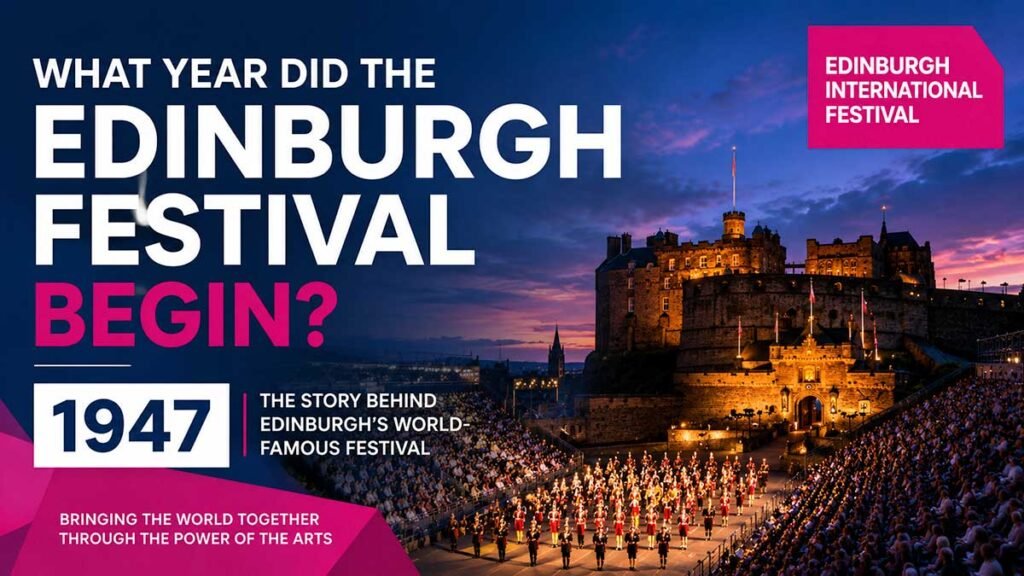
The Edinburgh Festival began in 1947, just two years after the end of the Second World War. The inaugural event was conceived to bring people together through culture and to help rebuild international relationships after years of conflict.
Held in August and September 1947, the first Edinburgh International Festival featured musicians, actors and performers from several countries and quickly established the Scottish capital as one of the world’s great cultural cities.
Why Was the Festival Created?
The driving force behind the idea was Rudolf Bing, who believed that the arts could promote “the flowering of the human spirit” in the difficult years following the war. Edinburgh, with its dramatic setting, historic architecture and existing concert venues, was chosen as the ideal host city.
The festival was supported by the City of Edinburgh and quickly attracted international attention.
The Birth of the Edinburgh Fringe
While the official Edinburgh International Festival was taking place, eight theatre companies that had not been invited decided to perform anyway. They staged their own productions in venues around the city, creating what would become the Edinburgh Festival Fringe.
Today, the Fringe is the largest arts festival in the world, featuring thousands of performances every August.
A Festival City
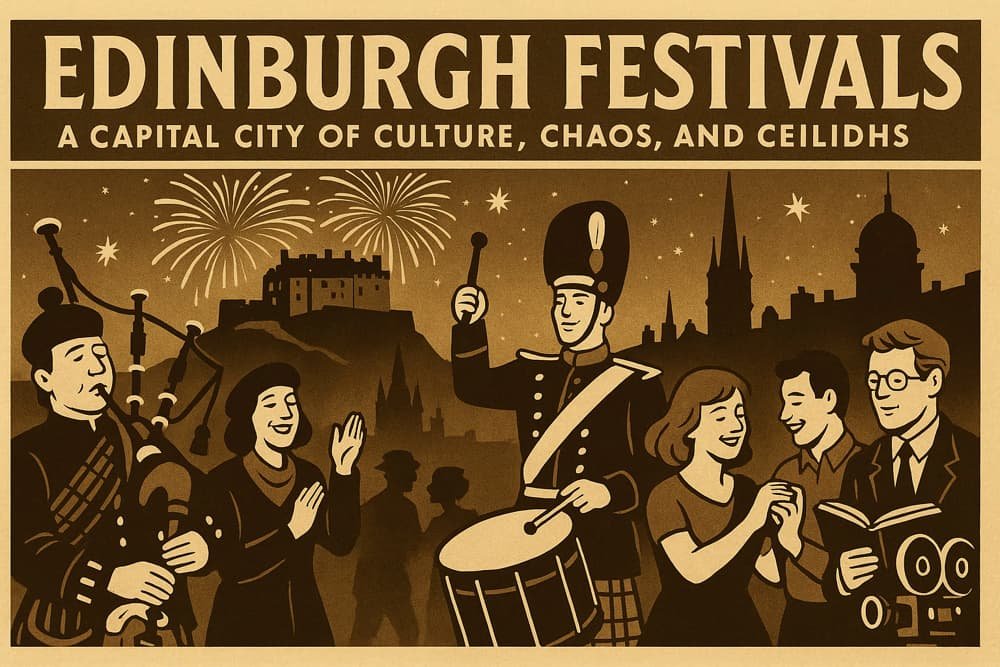
What started as a single cultural festival has grown into a collection of major events that transform Edinburgh each summer. Alongside the International Festival and the Fringe are celebrations such as the Royal Edinburgh Military Tattoo, the Edinburgh International Book Festival and the Edinburgh International Film Festival.
Together they attract millions of visitors and performers from across the globe, generating hundreds of millions of pounds for the Scottish economy each year.
Whether you’re attending a classical concert, a comedy show or a street performance on the Royal Mile, you’re taking part in a tradition that began with a bold post-war vision nearly eight decades ago.
Affiliate link
Edinburgh Quick Links
- Edinburgh Attractions
- Royal Mile – Places to visit
- What’s On
Share this page.