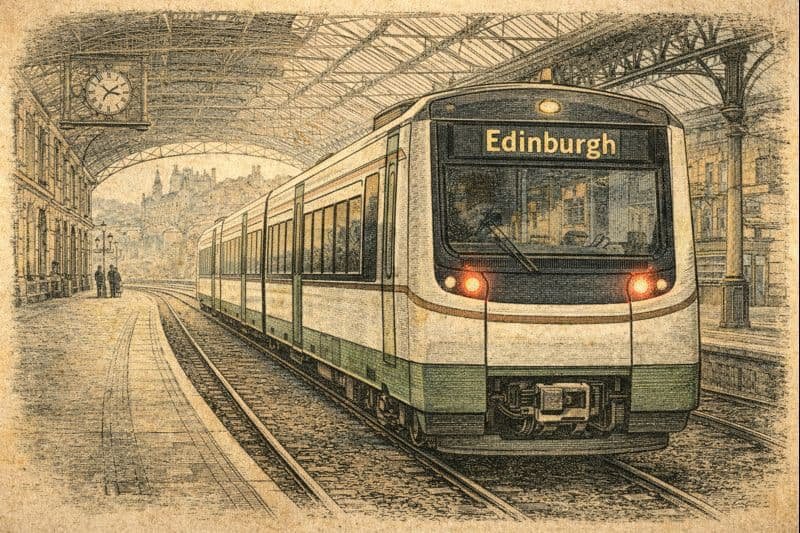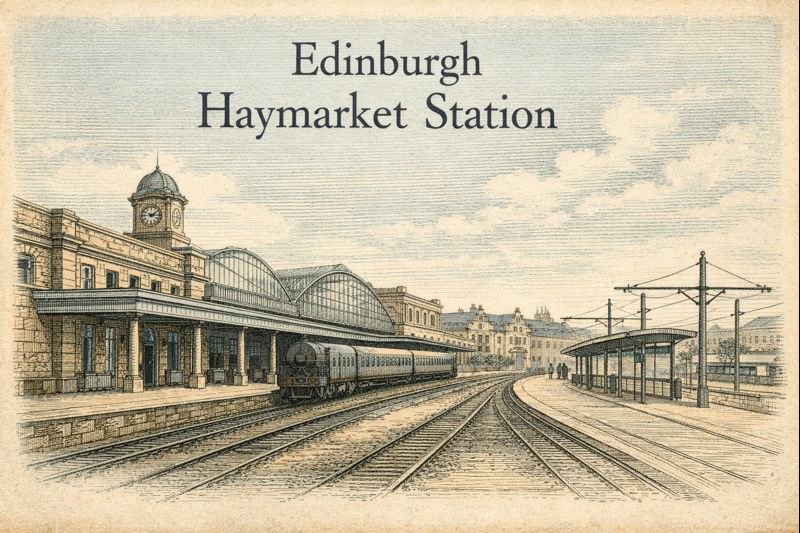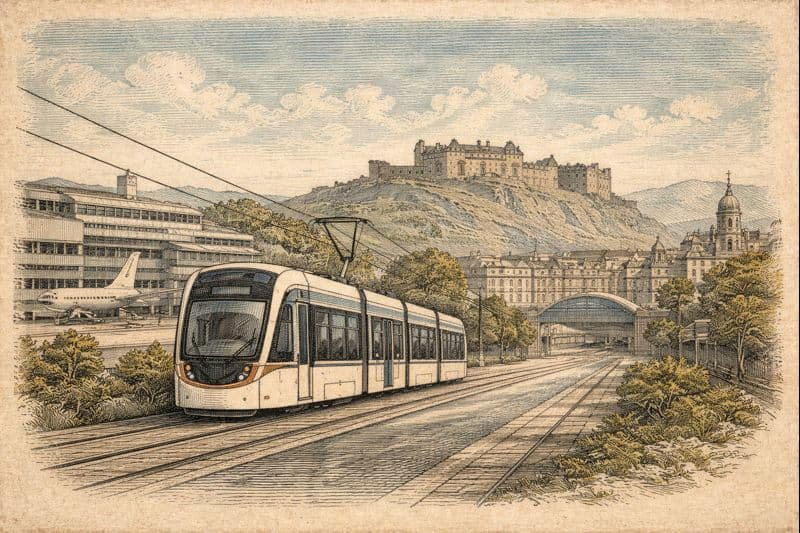
The Edinburgh Trams system is a significant addition to the city’s 21st-century transport network. Modern and electrically powered, the trams provide a key east–west connection between the city centre, the airport, and the north Edinburgh waterfront. Although their reintroduction was controversial, trams are now a regular feature on Edinburgh’s streets.
Route and operation
The current tram line operates between Edinburgh Airport and Newhaven, serving major corridors. Key stops include Ingliston Park & Ride, Edinburgh Park, Haymarket, Princes Street, and Leith Walk before reaching the waterfront.
Trams run frequently and are fully accessible, making them popular with commuters, visitors, and airport passengers. The system integrates with buses and rail at key interchanges, such as Haymarket, and uses unified ticketing with the city’s public transport network. The tram provides a reliable alternative to road travel on Edinburgh’s busiest routes.
Edinburgh Airport to Waverley by tram
Trams do not stop inside Edinburgh Waverley Station, but the connection from the airport is straightforward and convenient for travellers with luggage. From the airport, take the tram to St Andrew Square, which is the closest stop to Waverley.
From St Andrew Square, the walk to Waverley Station takes about five minutes along clear, signposted, mostly level routes. For most visitors, this transfer is easier and more predictable than using a bus or taxi through city-centre traffic, and it’s one of the most straightforward ways to travel from Edinburgh Airport to the main railway station area. Once at Waverley, national rail services connect easily to destinations across Scotland and the rest of the UK, making the tram a natural first step in many onward journeys.
A brief history of the modern tram
Plans to reintroduce trams in Edinburgh began in the early 2000s as a response to congestion, emissions, and increasing travel demand. Construction started in 2008 but faced delays, cost overruns, and political challenges. The initial network was scaled back, and the first line opened in 2014 between the airport and York Place.
Despite the difficult gestation, passenger figures steadily grew, and despite early challenges, passenger numbers increased, and public opinion improved as the benefits became evident. The extension to Newhaven via Leith Walk opened in 2023, completing the city-centre-to-waterfront link originally planned.
Edinburgh Trams operates the system on behalf of the city. In fact, the city once had one of the most extensive tramway systems in Britain. Operated by Edinburgh Corporation Tramways, the first network began with horse-drawn trams in the late 19th century before transitioning to electric operation.
By the early 20th century, trams served much of Edinburgh, from Leith and Portobello to Corstorphine. However, post-war priorities shifted toward buses and private cars, leading to the closure of the tram system in 1956 after nearly 80 years of service.
The future of trams in Edinburgh
With the Newhaven extension complete, future expansion is under discussion. Potential new lines may serve south Edinburgh, Granton, or additional park-and-ride sites. Any expansion will depend on funding, political agreement, and alignment with the City of Edinburgh Council’s climate and transport objectives.
What is clear is that trams are now firmly part of Edinburgh’s transport system. They provide a low-emission, high-capacity option suitable for a growing city with limited road space. After a challenging return, modern trams now follow historic routes, shaping how Edinburgh moves today and in the future.