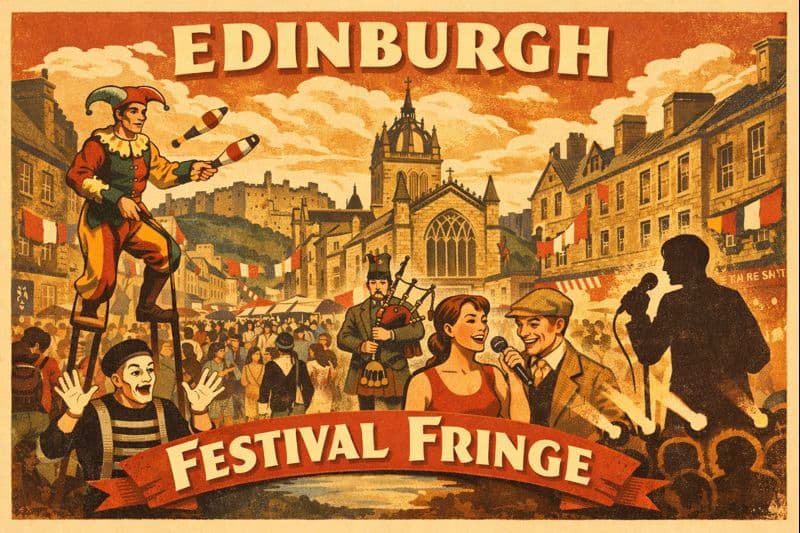
The Edinburgh Festival Fringe is the world’s largest arts festival, bringing a lively and sometimes chaotic energy to Edinburgh every August. For three weeks, the city turns into a stage, with pubs, church halls, basements, pop-up venues, and grand theatres hosting thousands of performances.
These range from comedy and theatre to dance, music, circus, spoken word, and more. Unlike most festivals, the Fringe is open to anyone who wants to perform, which creates a unique sense of excitement and surprise. If you’re new to the festival, you can find schedules and tickets on the official Fringe website or at box offices around the city. To get your bearings, try visiting the main box office on the Royal Mile for help, or download the official Fringe app to explore the program and get updates. These steps can help you feel welcome and less overwhelmed.
The Fringe started in 1947 when eight theatre companies showed up uninvited to perform alongside the new Edinburgh International Festival. Rather than being turned away, they found places to perform wherever possible, starting a tradition of open access and creative freedom. This spirit is still alive today. The Fringe now runs alongside other big summer festivals, but it stays independent, with no artistic director deciding which shows are included.
The Fringe – It’s Big!
The Fringe is known for its huge scale. Each year, audiences can pick from thousands of shows in hundreds of venues. International stars try out new material, and first-time performers take the stage for the first time. Many careers begin here, and surprises are common. While comedy is popular and often gets the most attention, theatre, dance, physical performance, and experimental shows are just as important to the festival.
The streets are as important as the stages. The Royal Mile becomes a daily carnival of flyers, costumed performers, snippets of dialogue, and improvised routines. This ritual of flyering is a defining feature of the Fringe, as performers personally pitch their shows to passers-by. It can be overwhelming, but it also creates a unique intimacy between artists and audiences, strengthening the sense that the festival belongs to everyone.
For those who might find the hustle and bustle a bit too much, consider taking regular breaks to recharge. Seek out quieter spots in the nearby parks or small cafes where you are able to momentarily escape the crowds and gather your mind before jumping back into the festival’s animated atmosphere. To make navigating busy areas less daunting, try visiting popular spots outside peak hours, such as early in the morning or later in the evening. Additionally, consider following routes just off the Main Streets, which can offer a little more breathing room while still keeping you close to the action.
Venues
Venues at the Fringe include everything from well-known theatres to makeshift spaces above pubs or in university buildings. Some shows are carefully produced, while others are more spontaneous and rough around the edges. This mix is part of what makes the festival special. You might see a top-rated show one hour and a wild experiment the next. The Fringe encourages both artists and audiences to take risks. If you’re not sure what to see, read the short descriptions in the Fringe programme, ask locals for tips, or follow recommendations from other festival-goers. These methods often lead to great discoveries. For a low-cost option, check out free shows or ‘pay what you want’ events. These let you try different performances without worrying about the price, making the festival more fun and unpredictable.
The Fringe Society organises and supports the festival by providing infrastructure, box office services, and practical help, all while keeping the festival open to everyone. The Society does not choose or judge which performances are included, so the programme changes each year in response to new trends, world events, and creative ideas.
The Fringe changes Edinburgh in big ways. Hotels, restaurants, pubs, and cafés get very busy, and the city’s population grows for a few weeks. This brings both benefits and challenges, like crowded streets and limited places to stay. To make your visit easier, book your accommodation early. Hostels or shared lodgings can be good options. Look for ways to save money, such as using student discounts, taking advantage of meal deals at local restaurants, or packing snacks and drinks for the day. Eating at quieter times can also help you spend less and avoid crowds.
To get the most out of the Fringe, try to find a balance. It helps to plan ahead by booking a few shows you really want to see, but also leave time for spontaneous adventures. For example, you could book a morning show, then spend the rest of the day exploring or following recommendations from other festival-goers. Some of the best experiences happen by chance, like discovering a show from a flyer or stumbling on a new venue. If you have accessibility needs, you can find information about accessible venues and shows easily, so everyone can enjoy what the Fringe has to offer.
In the end, the Edinburgh Festival Fringe is more than just an event—it’s a unique state of mind. It’s bold, lively, sometimes tiring, but always creative. Few places offer so much artistic energy in one place, and even fewer welcome everyone, from seasoned professionals to curious newcomers, to join in.
The Fringe is a key part of Edinburgh’s identity and shapes how people around the world see the city.