Edinburgh’s Royal Mile ends with a bang at the Palace of Holyroodhouse, the official Scottish seat of the royal family and a stage for centuries of drama.
From medieval monks to murder plots, royal intrigue to modern-day ceremonies, Holyroodhouse has witnessed the full sweep of Scotland’s story, making it one of Edinburgh’s must-see, history-soaked landmarks.
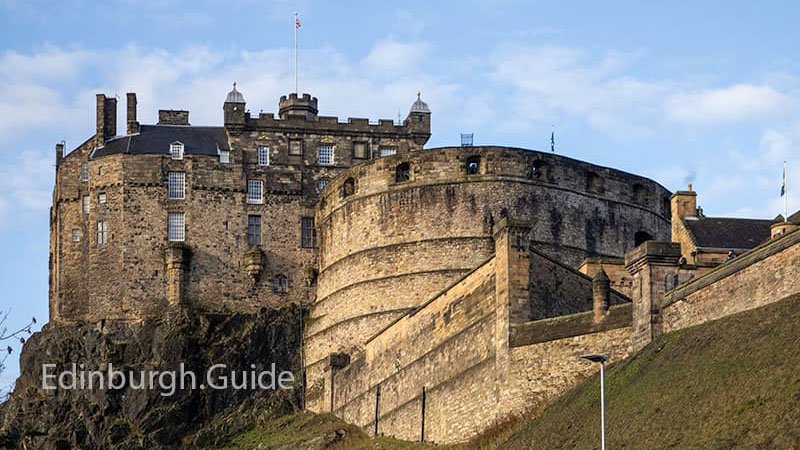
While Edinburgh Castle looms over the city’s skyline with tales of war and power, Holyroodhouse offers a different atmosphere; it invites visitors behind the velvet rope to glimpse royal secrets, scandals, and centuries of shifting Scottish politics.
The story of Holyrood starts in 1128, when King David I, spooked by a stag with a glowing cross in the antlers, founded an abbey here. The abbey’s name, meaning “Holy Cross”, survives in legend and in its spooky ruins, which still lie within the palace grounds.
Royal apartments grew beside the abbey, and by the 1500s, Holyroodhouse was Scotland’s top royal address.
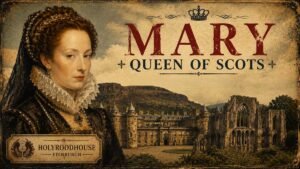
Its most famous occupant? Mary, Queen of Scots, whose dramatic legacy still haunts these halls.
Between 1561 and 1567, Mary called Holyroodhouse home, living through plots, betrayals and a notorious murder. Her secretary, David Rizzio, met a grisly end here, stabbed by conspirators (with her husband at the helm), right in front of the pregnant queen.
The scandal still rings through the palace’s marble corridors.
1603 – The Union of the Crowns
Holyroodhouse played a starring role in history again in 1603, when James VI of Scotland became James I of England and took the crown south. The palace remained centre stage for Scottish ceremonies, and the look we see today, grand towers and all, comes courtesy of a 1670s royal makeover by Charles II.
Holyroodhouse is an architectural mashup; part medieval, part classical grandeur.
Its iconic twin towers frame a courtyard fit for royalty, while inside, visitors wander through lavish state rooms, ornate ceilings, and royal relics still in use by the modern monarchy.
Don’t miss the Great Gallery: its walls lined with portraits of legendary (and sometimes mythical) Scottish kings. Once the scene of grand banquets and royal receptions, the gallery is a visual shout-out to Scotland’s ancient royal pedigree.
Palace of Holyroodhouse Today
Today, Holyroodhouse is still very much alive, a working palace where the monarch hosts ceremonies, honours, and high-profile events that keep the royal-Scottish connection front and centre.
Step outside, and the palace gardens roll out towards Arthur’s Seat, blending royal elegance with wild volcanic landscape. With the Scottish Parliament and Dynamic Earth just next door, Holyroodhouse sits at the crossroads of ancient monarchy and modern Scotland.
Holyroodhouse isn’t just a museum; it’s a living time machine. Everyone from medieval monks to Renaissance queens, Jacobite rebels to modern-day tourists, has crossed its threshold.
The roofless abbey next door, battered by centuries of wind and rain, adds to the atmosphere and serves as a reminder of the storms (political and religious) that rocked Scotland.
The Palace of Holyroodhouse is another proof that Edinburgh has a dual personality. In minutes, you can stroll from medieval alleyways to royal splendour, volcanic hillsides to political debate, ancient legend to living tradition.
Whether you approach from the Royal Mile or catch it against the jagged Salisbury Crags, Holyroodhouse stands out, a living landmark where Scottish history feels thrillingly close.