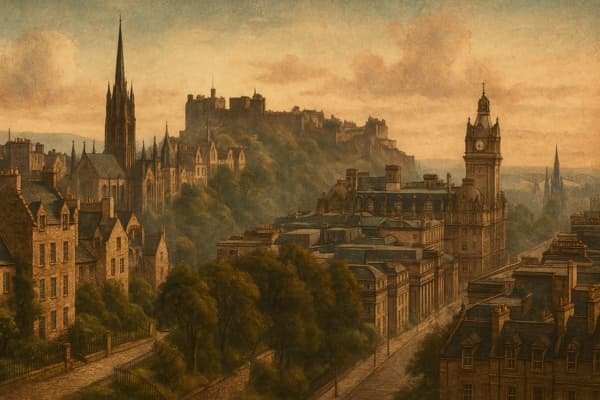
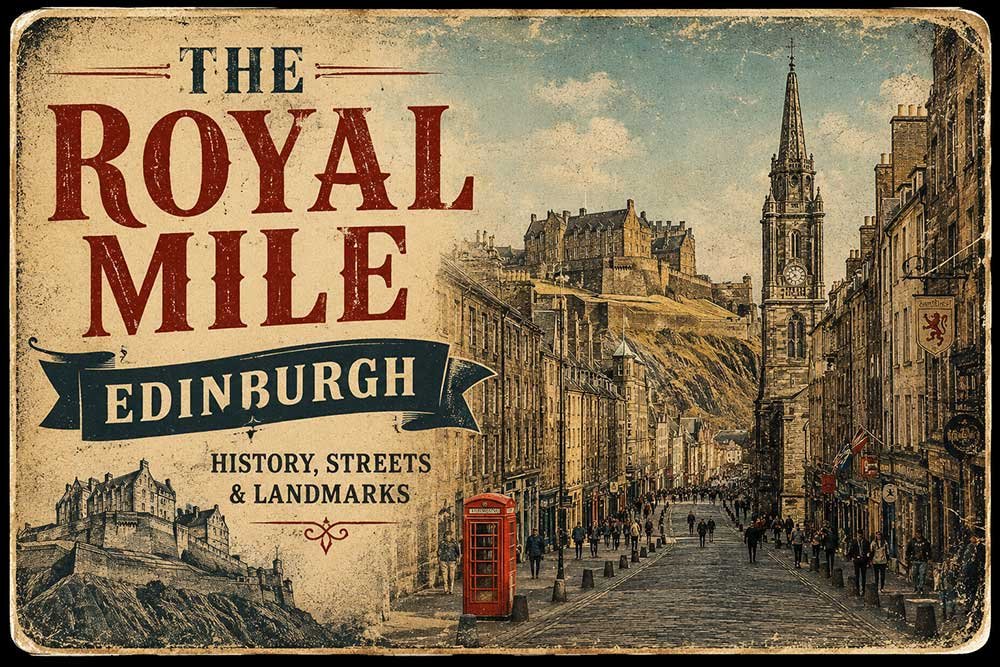
The Royal Mile is at the centre of Edinburgh’s Old Town and is one of Scotland’s most famous streets, even though it is actually made up of several streets. It runs downhill from Edinburgh Castle to the Palace of Holyroodhouse and has been the main route through medieval Edinburgh for centuries.
The Royal Mile is made up of several streets: Castlehill, Lawnmarket, High Street, Canongate, and Abbey Strand. Together, they create the ceremonial route that links the old royal castle with the palace at Holyrood. Each section has its own unique history, but today they are all known as the Royal Mile.
Despite its name, the Royal Mile is not exactly one English mile long. It is closer to a Scots mile, an old Scottish measurement equal to about 1.12 modern miles, or roughly 1.8 kilometres.
Near the top of the street is St Giles’ Cathedral, which has long been important to Scotland’s religious and civic life. At the bottom of the Royal Mile, the modern Scottish Parliament Building stands out, showing the contrast between old and new Edinburgh.
For centuries, this street was the centre of Scotland’s political, social, and commercial life. Merchants did business here, nobles built tall stone houses, and crowds gathered for public executions, royal events, and celebrations. Many of the tenement buildings are centuries old and stand above a maze of narrow alleys called closes and wynds. These hidden passageways once housed both wealthy merchants and the city’s poorest people.
Overcrowding in the Royal Mile
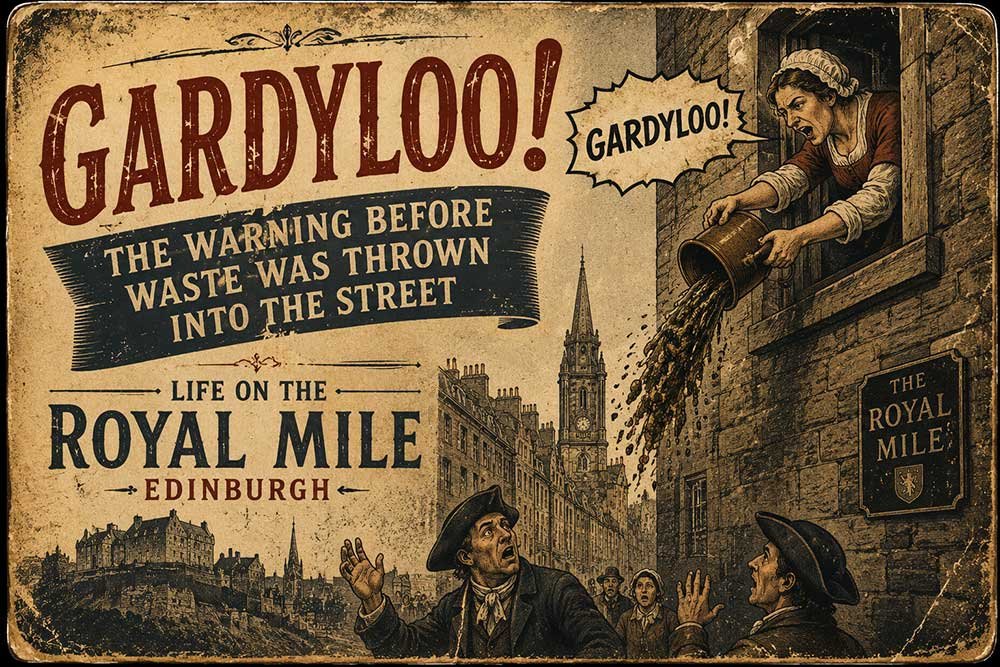
During the 17th and 18th centuries, thousands of individuals resided in tall tenement buildings, some of which were considered unusually high for the period. Due to inadequate sanitation, residents frequently disposed of chamber pot contents from upper windows into the streets below, typically after shouting the warning cry “Gardyloo!” This notorious practice became associated with Old Edinburgh. Waste, noise, smoke, and disease characterised daily life in the densely populated alleys and streets surrounding the Royal Mile.
The city remained largely confined within its historic defensive walls, resulting in a growing population density amid a network of tall buildings, narrow alleys, and unsanitary streets near the Royal Mile. Living conditions were unhealthy and disordered, marked by inadequate sanitation, limited access to fresh air, and frequent disease outbreaks. Consequently, many affluent residents relocated from Old Town in search of cleaner and more desirable living environments.
Meanwhile, Edinburgh was turning into one of Europe’s leading intellectual centres during the Scottish Enlightenment. Thinkers, lawyers, doctors, scientists, and philosophers were changing how people saw the city, but most of Edinburgh still looked and worked like a crowded medieval town. City leaders worried that Edinburgh was falling behind other modern European capitals in both appearance and function.
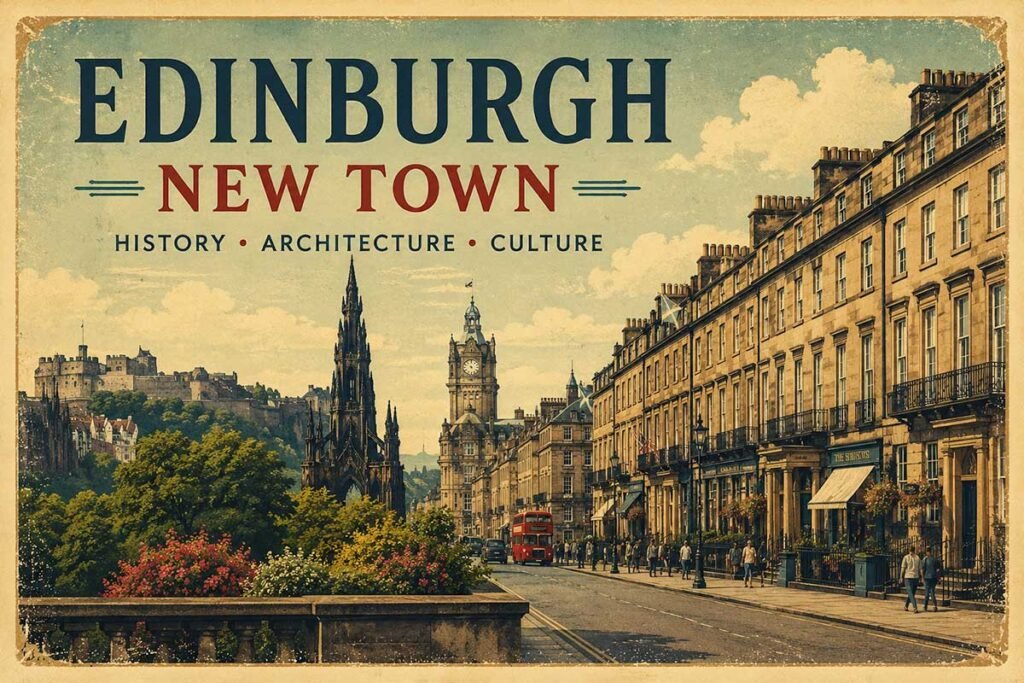
The answer was bold: build a whole new district outside the crowded Old Town. In 1766, plans were approved for what would become Edinburgh’s New Town, designed with wide streets, elegant terraces, gardens, and large squares. This new area was meant to offer light, space, order, and modern living standards that Old Town could not provide.
The difference between these two areas is still one of Edinburgh’s most striking features. The steep medieval alleys and crowded stone buildings of the Old Town stand next to the balanced, Georgian style of the New Town. Together, they make up the famous Old and New Towns of Edinburgh’s UNESCO World Heritage Site.
Affiliate link
Edinburgh Quick Links
- Edinburgh Attractions
- Royal Mile – Places to visit
- What’s On
Share this page.